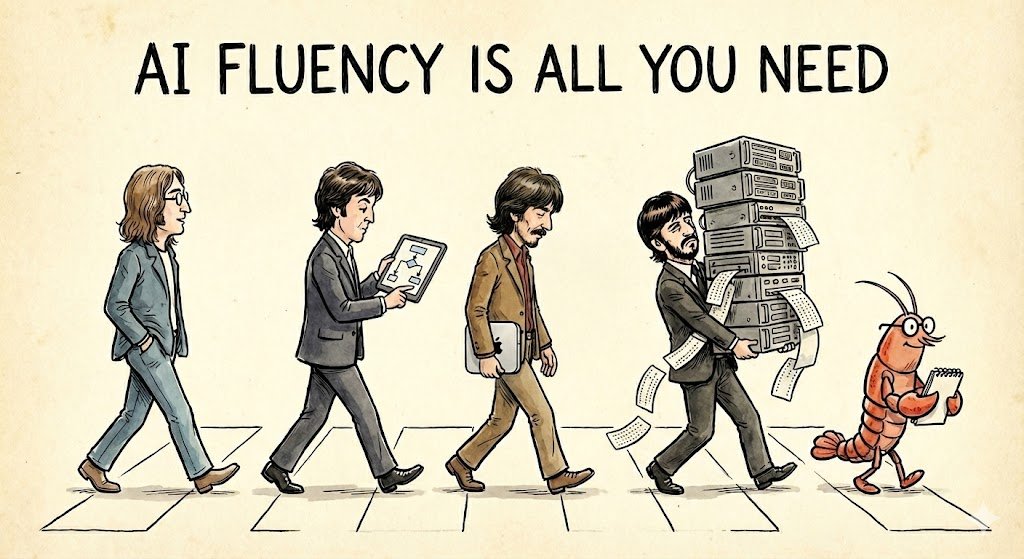
What is “All you need”?
A series cutting through AI hype. No tutorials. No hacks that expire in three months. Just key concepts that actually matter—the ones that stick around while everything else changes. Check the index for what’s coming.
Every week there’s a new model. A prompting technique you “have to know.” A Twitter thread with 10 hacks that will change your life. 40-hour courses. Certifications. Frameworks.
It feels like if you’re not up to date with everything, you’re out.
But is that true? Do you really need to know every new technique? Every model? Every hack?
Turns out, no. Turns out “fluency” is not that.
Anthropic (the Claude people) launched an AI fluency course. The 4Ds: Delegation, Description, Discernment, Diligence. It’s good. There are other definitions too. What I like about theirs is that they take the weight off the technical baggage…which matters, but it’s not everything (and sometimes it’s not even the most important part).
For me, fluency is not about knowing every technique. Techniques change every 6 months. Fluency is understanding what you’re using, when it works and when it doesn’t. It’s the difference between following recipes and knowing how to cook.
There’s a concept that helped me relax: leapfrogging.
In many developing countries, landline infrastructure was too expensive. What did they do? They jumped straight to cell phones. They didn’t go through the intermediate stage. They didn’t need to.
The same thing is happening with AI.
In 2023, a paper discovered that if you asked the model to “think step by step,” results improved. It was a hack. You had to know it, write it in the prompt. If you didn’t know it, you missed out.
In 2026, you switch models and it’s already built in. You don’t have to do anything.

See the pattern? Mass products will absorb the techniques. Your job is not to know every hack that comes out. Your job is to understand the fundamentals.
So what are those fundamentals?
There’s one that changes everything: understanding what an LLM actually IS.
This is not an oracle. It doesn’t give you the truth. It gives you what has the highest probability of sounding coherent. (It’s not about being factual — it’s probabilistic. Sounds subtle, but it changes everything.)
Two concepts, that’s it:
Temperature. It’s the dial between precision and creativity. Low temperature: more predictable, safer responses. High temperature: more variation, more “inventiveness.” It’s not good or bad — it depends on what you need. (And yes, even if you don’t see the control in the interface, the dial exists. Someone configured it for you.)
Hallucination. It’s not a bug. It’s creativity applied where you didn’t ask for it. The model doesn’t “lie”, it generates what sounds right. If you ask for data and it makes stuff up, it’s not malice. It just doesn’t know that it doesn’t know. (Just like us, sometimes.)
Why does understanding this matter?
A few months ago, Perplexity was the best for finding restaurants. Why? Because it limited hallucinations. It prioritized precision over creativity.
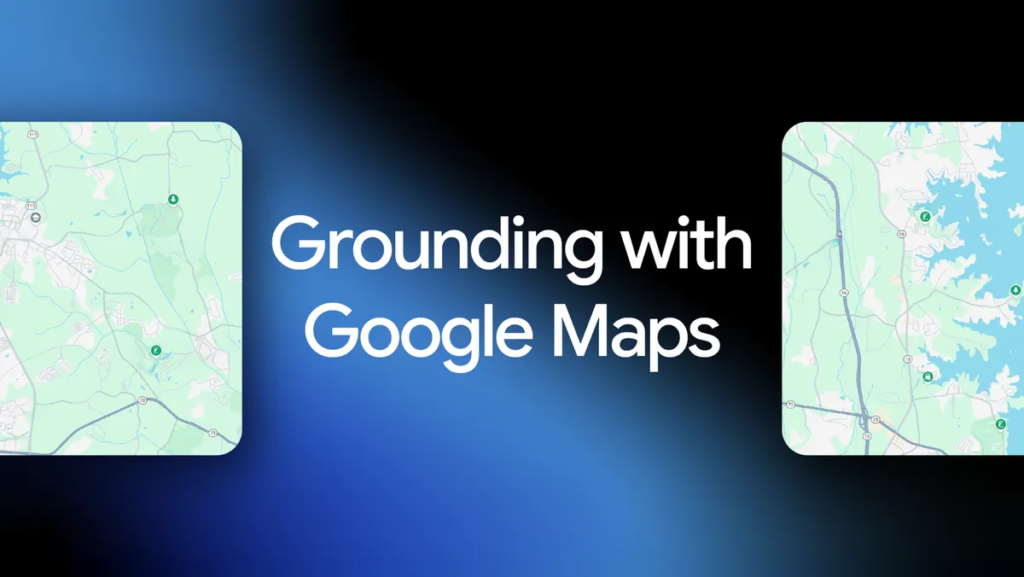
Then, in November, Gemini updated with real data from Google Maps. Now it has actual information, it doesn’t have to “make things up.” This represented a significant shift.
If you understand the nature of the model, you understand why one was better before and the other is better now. If you don’t, you’re always chasing the next shiny thing without knowing why. (Spoiler: it’s not fun.)
And there’s something else the frameworks don’t mention.
Your years of experience don’t make you slower with AI. The opposite: they tell you exactly what you don’t know. And AI helps you fill it in.
The 15-year-old has speed and an empty canvas. You have the map. Who gets where they want to go first?
(But that’s another post.)
AI fluency is not a 40-hour course. It’s not memorizing prompts. It’s not keeping up with every model that comes out.
It’s understanding what you’re using. That gives you a filter: knowing what’s worth learning and what’s hype that expires in 3 months. (Spoiler: most of it is hype.)
Start with the fundamentals. The rest will come, or disappear on its own.